
Article: Nicotine Pouches vs. Vaping vs. Snus: Which Smoke-Free Option Is Right for You?

Nicotine Pouches vs. Vaping vs. Snus: Which Smoke-Free Option Is Right for You?
The smoke-free nicotine market has exploded. What was once a binary choice, cigarettes or nothing, has fractured into a landscape of alternatives that look, work, and feel radically different from one another. Nicotine pouches, vapes, and snus now compete for the attention of adults looking to move away from combustible tobacco, and each comes with its own mechanics and user experience.
How Each Product Actually Works
Nicotine Pouches
Nicotine pouches are small, white, pre-portioned sachets that sit between your gum and upper lip. They contain no tobacco leaf whatsoever. Instead, the pouch is filled with plant-based cellulose fibers, nicotine, pH adjusters like sodium carbonate, food-grade flavorings, and moisture agents such as glycerol. Once placed, saliva activates the pouch and begins releasing nicotine, which is absorbed through the oral mucosa, the soft tissue lining your mouth. The pH adjusters play a critical role here: they shift the nicotine into its unprotonated (freebase) form, which crosses mucous membranes more efficiently. This is why pouch manufacturers carefully calibrate pH levels. Too neutral and absorption stalls, too alkaline and irritation increases.

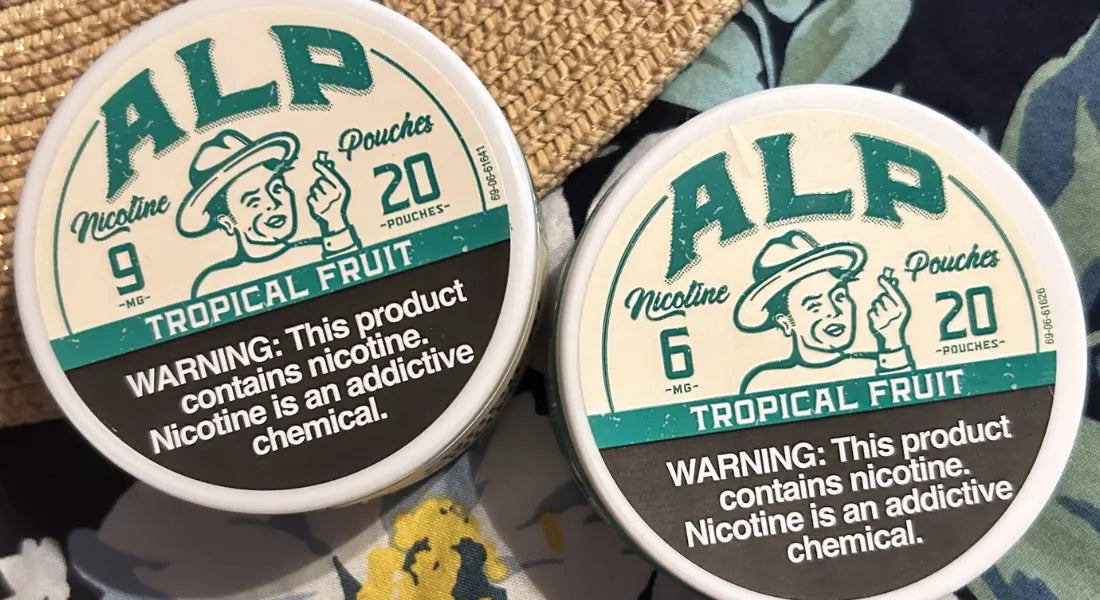
The result is a gradual nicotine release that typically lasts 20 to 60 minutes per pouch, depending on the strength and brand. Brands like ALP offer pouches across multiple strength tiers, like 3 mg, 6 mg, and 9 mg, along with a wide range of flavors from Chilled Mint to Tropical Fruit, giving users fine-grained control over both intensity and taste.
Vaping
Vaping devices work by heating a liquid solution (e-liquid) containing nicotine, propylene glycol, vegetable glycerin, and flavorings into an aerosol that the user inhales. The device itself consists of a battery, a heating coil (atomizer), a tank or pod for the e-liquid, and a mouthpiece. Nicotine enters the lungs as aerosolized droplets and passes rapidly into the bloodstream. First-generation e-cigarettes delivered roughly one-third to one-quarter the nicotine of a combustible cigarette after five minutes of use, but newer-generation devices have closed that gap significantly, producing plasma nicotine levels 35–72% higher than their predecessors.
Snus
Snus is a moist, ground tobacco product with roots in 18th-century Sweden. Like nicotine pouches, it's placed under the upper lip and absorbed through the oral mucosa. The key difference is that snus contains actual tobacco leaf. What sets snus apart from other smokeless tobacco products is its manufacturing process. Snus is pasteurized, heated to reduce microbial activity, rather than fire-cured or fermented. This pasteurization process results in measurably lower levels of tobacco-specific nitrosamines (TSNAs) compared to other traditional smokeless products. Snus comes in two formats:
- loose - a moist powder the user shapes by hand
- portioned - pre-packed sachets similar in appearance to nicotine pouches
The nicotine delivery profile is comparable to pouches, though the presence of actual tobacco gives snus a distinct flavor profile that some longtime users prefer.
Nicotine Strength and Control
One of the most practical questions when choosing between these products is how much nicotine you're actually getting, and how much control you have over that:
- Nicotine pouches offer the most straightforward dosing. Strengths are printed per pouch, typically ranging from 1.5 mg on the low end to 20 mg for extra-strong options. Most users settle into the 4–9 mg range. You use one pouch at a time, you know exactly what's in it, and the experience is consistent from pouch to pouch.
- Snus uses a similar strength scale: low (up to 3 mg per portion), normal (3–6 mg), strong (6–9 mg), extra-strong (9–13 mg), and ultra-strong (13–20 mg). Portioned snus delivers a predictable dose, but loose snus introduces more variability since the user controls how much tobacco goes under the lip.
- Vaping is where dosing gets complicated. E-liquids express nicotine concentration in mg/mL, but the amount of nicotine you actually absorb per session depends on factors like puff duration, device power, coil type, and airflow settings. Two people using the same e-liquid can get meaningfully different nicotine doses. For users who want precise dosing, this variability is a real drawback.
Where You Can (and Can't) Use Them
Nicotine Pouches: Virtually No Restrictions
Because nicotine pouches produce no smoke, vapor, odor, or visible sign of use, they can be used in nearly any setting. This discretion factor has driven adoption in professional environments. Nicotine pouches are increasingly popular among working professionals precisely because they don't require stepping away from a desk, a meeting, or a video call. There's no device to charge, no cloud to exhale, no lingering smell on clothing. Place a pouch, use it for 30–60 minutes, then dispose of it.
Most workplace smoking and vaping policies don't cover nicotine pouches at all, since there's no combustion or aerosolization involved. The exception is healthcare facilities and some government buildings that maintain blanket bans on all nicotine products regardless of format.
Vaping
Most indoor public spaces now prohibit vaping alongside smoking, and a growing number of workplaces have updated their policies to explicitly ban e-cigarette use indoors. Airports, restaurants, bars, and public transit systems in most major cities treat vaping the same as smoking. The visible vapor cloud and the device itself make it impossible to use discreetly. For users in client-facing roles, social situations where smoking is frowned upon, or contexts where they'd simply rather not broadcast their nicotine use, this visibility is a meaningful limitation.
Snus
It's banned across the entire European Union except Sweden. The EU prohibition dates back to 1992, when the European Parliament moved to ban "oral tobacco" products in response to aggressive marketing of American smokeless tobacco aimed at young people. When Sweden joined the EU in 1995, it negotiated a permanent exemption because snus was deeply embedded in Swedish cultural heritage, and roughly 20% of the Swedish population used snus at the time.
The Tobacco Products Directive (TPD), first passed in 2001 and revised as TPD2, reaffirmed this ban. So if you're based anywhere in Europe outside Sweden, snus simply isn't a legal option at retail. This regulatory reality narrows the field considerably for European consumers. In the United States and Canada, snus is legal and available, though it occupies a niche market compared to both vaping and the fast-growing nicotine pouch category.

The Flavor Landscape
Flavor options shape daily satisfaction in ways that are easy to underestimate. If you're using a product multiple times a day, enjoying the taste is essential for sustained use.
- Nicotine pouches lead the category in flavor diversity. The market offers everything from classic mint, spearmint, and wintergreen to fruit blends, coffee, cinnamon, and even unflavored options for purists. ALP's lineup, for example, spans eight distinct flavors including Mountain Wintergreen, Tropical Fruit, Sweet Nectar, and Caffeine Break, reflecting the industry trend toward treating flavor as a core part of the product experience, not an afterthought.
- Vaping historically offered the widest flavor range of any nicotine product, with thousands of e-liquid combinations available. However, flavor bans are rapidly shrinking this advantage. California prohibited flavored vape sales in-store starting in 2022 and extended the ban to online sales in January 2025. Utah outlawed flavored vapes in early 2025. As more states follow suit, the variety of legal flavors in vaping is contracting in real time.
- Snus offers the most limited flavor range. Traditional snus leans heavily on tobacco-forward profiles. Mint and wintergreen options exist, but the overall palette is narrower. For users who specifically enjoy the taste of tobacco, this is a feature. For everyone else, it can feel restrictive.
What It Actually Costs
Cost is rarely the deciding factor on its own, but over months and years, the differences add up.
- Nicotine pouches typically retail at $4–$5 per tin of 15–20 pouches, working out to roughly $0.22–$0.25 per pouch. For a moderate user consuming 8–10 pouches per day, that's approximately $60–$80 per month at retail. Bulk purchases and subscription models can meaningfully reduce the per-pouch cost. There's also zero hardware investment. No device, no charger, no replacement coils.
- Vaping costs depend heavily on your setup. Disposable vapes run around $45 per month for average use. Refillable pod systems are cheaper on e-liquid — roughly $16–$32 per month — but require periodic coil or pod replacements ($5–$15/month) and an upfront device purchase ($20–$60+). Advanced mod systems push the initial investment even higher. Over time, vaping can be cost-competitive, but the ongoing hardware maintenance adds friction and unpredictability.
- Snus pricing varies by market but generally falls between nicotine pouches and vaping. In Sweden, where it's widely available, a roll of 10 cans costs roughly 300–400 SEK ($28–$38 USD). In the US, individual cans typically retail for $5–$8. Since snus is legally available only in limited markets, price comparisons are less universally applicable.
The Environmental Footprint
Vaping's E-Waste Problem
Disposable vapes are an environmental disaster. Each unit contains a lithium-ion battery, plastic housing, electronic circuitry, and residual nicotine, making them simultaneously e-waste and hazardous waste. Lining up the disposable vapes sold in 2023 would stretch 8,772 miles, enough to span the continental United States three times.
The lithium alone in those batteries weighs nearly 30 tons annually, equivalent to the lithium needed for 3,350 electric vehicle batteries. Just 8% of young-adult vapers reported sending used devices to recycling facilities. Meanwhile, lithium-ion battery damage during waste handling causes fires in recycling and waste facilities, costing an estimated $95 million per year, according to data compiled by the U.S. PIRG Education Fund. Refillable vaping systems are better, but they still produce coils and e-liquid bottles that need to be disposed of.
Nicotine Pouches
Nicotine pouches avoid the electronics problem entirely. There's no battery, no circuit board, no lithium. The primary waste is the used pouch and the plastic tin. The pouch material itself is largely biodegradable, though the tins are plastic and should be recycled where facilities exist.
Snus: Similar to Pouches
Snus generates comparable waste to nicotine pouches. The tobacco content means the used portions shouldn't be composted, as nicotine is toxic to many organisms at high concentrations, but the waste stream is simple and doesn't involve hazardous electronic components.
The Regulatory Trajectory
Vaping is under the most regulatory pressure. In the US, the FDA has yet to authorize the vast majority of vaping products on the market, and enforcement is intensifying. The FY 2026 Agriculture Appropriations bill authorizes authorities to destroy shipments of unauthorized vaping products at the border. California has proposed legislation (AB 762) to ban all single-use, battery-embedded disposable vapes by mid-2026, citing environmental concerns. North Carolina began enforcing its Vapor Registry Law in July 2025, permitting only disposable vapes listed on a state directory of FDA-authorized products. The regulatory noose is tightening, and users of specific devices or flavors may find their preferred products disappearing from shelves.
Snus remains frozen in its regulatory position. It is legal in Sweden and the US, but banned everywhere else in the EU. There has been little legislative momentum to revisit the 1992 ban, despite Sweden's comparatively favorable tobacco-related outcomes. For consumers outside these markets, snus remains inaccessible.

Nicotine pouches currently face the lightest regulatory burden. Because they contain no tobacco leaf, they generally aren't classified under traditional tobacco product regulations in many jurisdictions. The market has grown from a niche product to a projected $10 billion global category in 2025, with forecasts suggesting continued expansion at a compound annual growth rate exceeding 30%. This rapid growth will almost certainly attract more regulatory attention, but for now, nicotine pouches enjoy the widest availability and fewest restrictions of the three options.
The smoke-free nicotine landscape is still evolving rapidly. Regulations will continue to shift, new products will enter the market, and consumer preferences will keep changing. What won't change is the importance of understanding what you're putting in your body, how it works, and what trade-offs you're making. Whatever you choose, make it an informed choice.
Sources:
- Grand View Research — Nicotine Pouches Market Size & Share Report, 2033
- Scientific Reports — Nicotine Absorption from Electronic Cigarette Use
- PMC — Nicotine Forms in Electronic Cigarettes
- PMC — The New Nicotine Pouch Category
- PMC — Nicotine Pharmacokinetics of Oral Nicotine Pouches
- CDC — About E-Cigarettes (Vapes)
- CDC — Nicotine Pouches
- FDA — E-Cigarettes, Vapes, and ENDS
- TIME — The Overlooked Environmental Impact of Vaping
- U.S. PIRG Education Fund — Vape Waste
- PMC — Scoping Review on E-Cigarette Environmental Impacts
- Tobacco Tactics — Snus: EU Ban on Snus Sales
- On: Yorkshire Magazine — Workplace Nicotine Use
- Duke-UNC Tobacco Treatment Studies — State Bans on Disposable Vapes